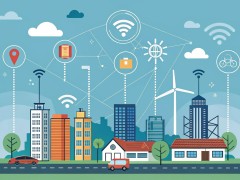
With the rapid development of the Internet of Things, artificial intelligence, and cloud computing technologies, the fields of smart home and commercial security are undergoing profound changes. The full-process intelligentization from sensors to cloud monitoring not only enhances security and convenience but also provides users with more personalized and efficient services. This paper will explore the technical architecture, application scenarios, advantages, and future development trends of the sensor-to-cloud monitoring technology in smart home and commercial security.
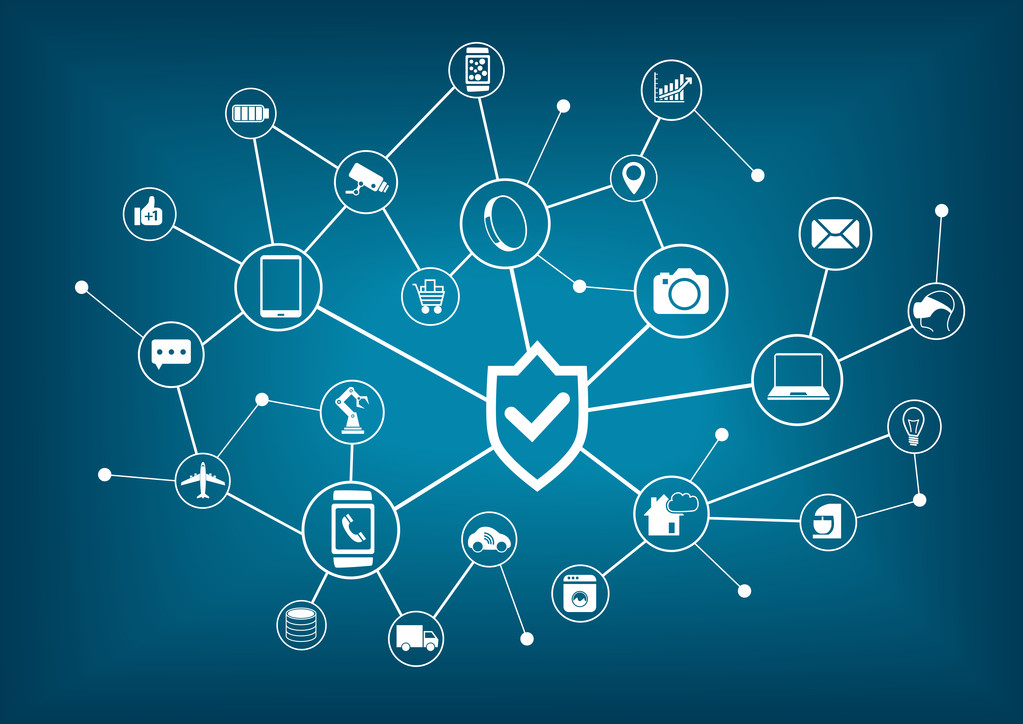
Technical architecture: from sensor to cloud monitoring
Sensing layer: sensor network
The foundation of smart home and commercial security systems is the perception layer, which consists of various sensors such as door magnetic sensors, infrared human body sensors, smoke detectors, gas leakage sensors, and high-definition network cameras. These sensors are responsible for collecting environmental data and security status information in real time, providing the basic data for subsequent analysis and decision-making.
Network layer: data transmission
The network layer is responsible for efficiently transmitting the data collected by the perception layer to the cloud. Common transmission technologies include wireless communication technologies such as Wi-Fi, Zigbee, and NB-IoT. These technologies not only ensure the stability of data transmission but also support long-distance communication for low-power devices.
Platform layer: Cloud computing and analysis
The cloud platform is the core of the entire system, providing powerful data storage, processing, and analysis capabilities. Through cloud computing and big data technology, the platform can analyze sensor data in real-time, identify abnormal events, and trigger alarms. In addition, the platform also supports device management, user configuration, and remote control functions.
Application layer: user interaction
The application layer is oriented towards end users, providing intuitive and easy-to-use mobile APPs and web clients. Users can view real-time video from their home or commercial premises, receive alarm messages, control smart devices, and query historical records through these clients.
Application scenarios: smart home and commercial security
Smart home
In the smart home scenario, sensors and cameras can monitor the safety status of the home environment in real time. For example, door and window sensors can detect the opening and closing status of doors and windows, and smoke detectors can promptly detect fire hazards. Through the cloud platform, users can check the home status and control devices anytime and anywhere through the mobile APP.
Commercial security
In commercial scenarios, the application of sensors and cameras is more extensive. For example, 4K high-definition cameras support face recognition and abnormal behavior detection, and can be linked with access control systems to achieve second-level response. In addition, through big data analysis, the system can optimize store layout and customer experience.
Advantages and Value
Enhance security
With real-time monitoring of sensors and cameras, the system can quickly identify abnormal events and trigger alarms. For example, the smart security center can connect sensors and cameras with mobile applications, allowing users to view alarm information anytime and anywhere.
Optimize user experience
Users can remotely control home devices through mobile apps or voice assistants, view real-time videos and historical records. This convenience not only enhances user experience but also provides users with a more intelligent lifestyle.
Reduce costs
Through predictive maintenance and automated control, the system is able to reduce equipment failure rates and operating costs. For example, by analyzing the operational data of equipment, the system can predict faults in advance and schedule maintenance.
Future development trends
Intelligence and automation
With the development of artificial intelligence technology, smart home and commercial security systems will become more intelligent. For example, through machine learning algorithms, the system can automatically learn the user's behavior patterns and provide personalized services.
The integration of edge computing and cloud computing
Edge computing technology will concentrate processing power on the sensors and cameras themselves, reducing data transmission latency. At the same time, cloud computing platforms will continue to provide powerful data processing and analysis capabilities. This integration will make the system more efficient and reliable.
Data Security and Privacy Protection
As the importance of data security and privacy protection increases, smart home and commercial security systems will adopt more advanced encryption technologies. For example, with DTLS encryption, the system can ensure the security of data transmission.
Summary
The full-process intelligence from sensors to cloud monitoring is redefining the future of smart home and commercial security. Through real-time monitoring, data analysis, and remote control, the system not only enhances security and convenience but also provides users with more personalized and efficient services. With the continuous advancement of technology, smart home and commercial security systems will become more intelligent, automated, and secure.