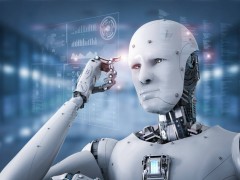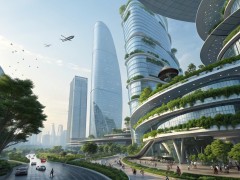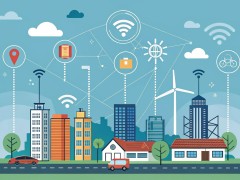
In recent years, with the continuous breakthrough of artificial intelligence technology and the systematic deployment at the policy level, the construction intelligentization industry is in the process of profound structural transformation. Especially the introduction of the "Opinions on Deepening the Implementation of 'Artificial Intelligence+' Action" in 2025, which marks that the development of artificial intelligence has officially entered the stage of deepening and promoting the national strategy.
This policy not only establishes the important position of AI as a new quality of national productive forces, but also clarifies its core role in promoting the upgrading of industrial structure, optimizing social governance, and improving the quality of people's lives. The construction industry, as one of the important scenarios for the application of artificial intelligence, is becoming a key area for the implementation of the "Artificial Intelligence +" strategy.
1. Intelligent transformation of buildings under policy guidance
At the national level, AI is seen as an important driving force for the transformation of traditional industries towards high added value and high efficiency. The construction industry has always been a pillar industry of the national economy, but for a long time, its level of digitalization and intelligence has been relatively lagging, and the phenomenon of information islands and system fragmentation is widespread. The introduction of the "Opinions" provides policy and institutional guarantees for the intelligent upgrading of the construction industry, and constructs a complete support system for the application of AI in the field of architecture from the construction of data infrastructure, the overall planning of intelligent computing power to the opening up of model services.
The core transformation of building intelligence lies in the transition from "automation" to "intelligentization," and from "program logic" to "algorithmic cognition." This shift not only involves the optimization of control systems but also manifests as a leap from passive response to active decision-making in architectural functions. The introduction of artificial intelligence endows buildings with the capabilities of environmental perception, behavior prediction, and self-learning, thereby achieving a qualitative improvement in multiple dimensions such as operational efficiency, energy consumption management, and residential experience. The "intelligentization" of buildings is no longer confined to the equipment level but gradually expands into a systematic intelligent ecosystem driven by data and supported by algorithms.
2. The Evolutionary Logic of Intelligent Architecture: From Automatic Control to Embodied Intelligence
The development of building intelligence can be understood as an gradual evolution from automatic control systems to embodied intelligent systems. Traditional Building Automation Systems (BAS) rely mainly on preset rules and static logic, unable to cope with complex and changing environmental factors. With the integration of AI algorithms and sensor networks, buildings gradually acquire the ability for self-awareness and environmental adaptability. This"embodied intelligence"is not only an upgrade in technological form, but also a paradigm shift in the functional logic of buildings.
Embodied intelligent buildings take artificial intelligence models as their core, with multi-dimensional data as the basis for perception, and achieve adaptive operation through continuous learning and feedback correction.For example, in terms of energy management, AI systems can analyze climate conditions, human activities, and equipment status in real time, dynamically adjust lighting, air conditioning, and ventilation systems, and achieve the optimal balance between energy consumption and comfort. On the level of spatial experience, AI achieves active response to user emotions and needs through voice recognition, behavior analysis, and physiological parameter monitoring, making the building a "comprehending human" life space.
From a system architecture perspective, the core characteristic of embodied intelligent buildings lies in their "sensing-cognition-decision-action" closed-loop capability. The building is no longer a static physical carrier but a dynamically evolving organic system. Through the continuous training of AI models and the accumulation of environmental feedback, the building's operation strategies can self-optimize, and its energy consumption, environmental comfort, and safety indicators will improve over time.
Three, transformation of the construction industry driven by artificial intelligence
The introduction of artificial intelligence is reshaping the organizational logic and production relations of the construction industry chain. From the design phase to the construction and operation and maintenance, AI is gradually penetrating every link of the construction industry.
At the design end, the integration of generative AI with BIM technology has shifted architectural design from experience-driven to data-driven. Designers can quickly generate spatial schemes through AI models and evaluate lighting, energy consumption, and material performance in real time, achieving an efficient cycle from "conception" to "validation". AI not only improves design efficiency but also redefines the logic of architectural creation, making the design process computable and optimizable.
At the construction site, the combination of digital twin and AI vision technology has shifted the construction site from passive management to active sensing. The intelligent construction site system can monitor the construction progress, safety risks and resource allocation in real time, and the AI algorithm predicts the risks, thereby significantly enhancing the safety and accuracy of project management. Construction sites are transitioning from "labor-intensive" to "data-intensive".
During the operation and maintenance phase, the integration of AI and BIM forms the core framework for the entire life cycle management of the building. Through deep learning of equipment operation data, AI can predict equipment failures, optimize maintenance plans, and achieve predictive operation and maintenance. This not only reduces maintenance costs but also extends the life of the equipment, transforming the building from a "consumable asset" to a "sustainable operation system".
A deeper change lies in the reconstruction of the basic layer architecture. With the popularization of edge computing, all-optical networks, and smart computing nodes, the "information nervous system" of buildings is being formed. The operation logic of future buildings will be based on the "end-edge-cloud" smart computing collaboration structure, achieving real-time data computing and decision response. AI-driven buildings are no longer isolated information units, but active nodes in the smart city network.
IV. Industry Challenges and Transformation Bottlenecks
Although the application prospects of AI in the construction industry are broad, its implementation process still faces many realistic challenges. First, the decentralized data resources and the lack of unified standards issues restrict the training efficiency of AI models. The sources of construction data are complex, involving multi-dimensional information such as sensor data, construction data, operation and maintenance data, etc. The lack of a unified data governance system leads to the difficulty of fully releasing the value of data. Secondly, there is a lack of unified communication protocols and interface standards in the industry, and the compatibility between different manufacturers' systems is poor, which hinders the collaborative application of AI systems.
Moreover,the issue of talent structurehas also become an important factor restricting the intelligent transformation. The traditional construction industry focuses on engineering and construction management, lacking composite talents with AI algorithm and system integration capabilities. The introduction of AI not only requires technological innovation but also the renewal of management philosophy and industrial culture.
To break the above dilemma, it is necessary to form a systematic synergy from three aspects: policy, industry, and technology.On the policy level, the construction of mechanisms such as "Model as a Service (MaaS)" and "Smart Computing Power Voucher" should be promoted to reduce the threshold for small and medium-sized enterprises to apply AI.On the industry level, an open and shared standardized ecosystem should be built to achieve cross-system and cross-device interconnectivity.On the technical level, the construction of AI pilot verification platforms should be accelerated, and the AI achievements in the construction field should be replicable and popularizable through the pilot mechanism driven by scenarios.
5. From "Carbon Trace" to "Co-Wise": The Future Direction of Intelligent Architecture
The core goal of future building intelligence is not only energy conservation and automation, but also the unification of "carbon neutrality" and "co-intelligence". The introduction of AI technology enables buildings to actively participate in carbon management, achieving intelligent optimization from energy consumption monitoring to carbon emission prediction. AI algorithms analyze and schedule energy usage patterns, allowing buildings to meet functional requirements while minimizing carbon emissions, and achieving sustainable development goals of zero-carbon operation.
On a more macro level, AI will drive the formation of a symbiotic relationship between buildings and urban systems. Buildings are no longer isolated entities in the city, but key nodes in the digital nervous system of smart cities. Buildings share energy consumption data and operational strategies through AI platforms, achieving a "building-to-building" collaborative urban energy management system. The emergence of such a collective intelligence ecosystem signifies that building intelligence is transitioning from individual optimization to群体 intelligence.
From a humanistic perspective, the intervention of AI is also reshaping the social attributes of architecture. Architecture is not only a physical space, but also an interactive interface for emotions and behaviors. AI, by understanding human needs and environmental context, achieves a deep co-sensitivity between architecture and users, enabling architecture to truly possess the ability to "understand and serve people". Architecture thus transforms from a "physical space" into a "cognitive space", and evolves from an "energy consumer" into an "intelligent life form".
6. Preview of the Industry Event
At this critical period of industry transformation, with the theme of"Carbon Fiber New Opportunities·Building the Future with 'AI',the 26th China International Building Intelligence Summitis about to be held inBeijing and Shanghai, focusing on the low-carbon, networked, and intelligent development directions of AI-empowered architecture.
The Beijing station will be held on November 18, 2025, at the JinYu Sheraton Hotel. The conference, sponsored by Qianjia Zhike, brings together representatives from leading industry organizations such as the Chinese Academy of Building Design, Hisense Kangwei, Detwyler, Tongfang Taide, and Lianxin Communication. The conference will delve into topics such as AI and architectural network systems, low-carbon building standardization, and integrated wiring supporting smart computing.