By 2025, the global economy and the pattern of technology are experiencing a transformation centered on artificial intelligence and green, low-carbon development. The widespread adoption of AI technology and the deep advancement of carbon neutrality goals are jointly shaping a new development paradigm for the construction industry. As an important area of energy consumption and carbon emissions, the intelligentization process of the construction industry is not only about industrial upgrading but also about the realization path of the country's "double carbon" strategy.
“Carbon索 new opportunities, co-building the AI future”is not just an industry slogan, but an action proposition for the construction of smart buildings in the new round of technological revolution and green transformation. It reveals the dual logic of future construction industry development: on the one hand, to achieve efficient management and energy consumption optimization of the whole life cycle of buildings through artificial intelligence; on the other hand, to promote the transformation of buildings from “energy consumption main body” to “carbon intelligence individual” through the integration of carbon management and digital technology.
1. Macro-oriented: A new pattern of green and smart buildings under policy synergy
In the national policy system, artificial intelligence and green low-carbon have been established as the core strategic direction to lead the transformation of the future economic structure. The "Opinions on Deepening the Implementation of the 'Artificial Intelligence+' Action" released in 2025 clearly points out that the deep integration and application of artificial intelligence in key industries such as construction, energy, and transportation should be accelerated, and a new system of "Artificial Intelligence + Industrial Development" should be constructed. At the same time, the "Double Carbon" target has become the basic follow for the transformation and upgrading of the construction industry. Policies such as the "Carbon Peak Implementation Plan for the Urban and Rural Construction Field" and the "General Code for Energy Saving and Utilization of Renewable Energy in Buildings" have been issued one after another, promoting the establishment of systematic standards in the construction industry in terms of green design, energy-saving operation, and low-carbon materials.
From the perspective of policy synergy, "AI+ low-carbon" is becoming the strategic main line for the integration of digitalization and low-carbonization in the construction industry. AI is not only a technical fulcrum for achieving energy conservation and carbon reduction in buildings, but also a structural force driving the construction industry towards high-quality development. At the national level, the transition from a single energy efficiency management to a "smart carbon governance system" is underway, and the construction intelligentization industry is thus endowed with a higher-level strategic mission.
2. Technology-driven: AI enabling the evolution of building carbon intelligence
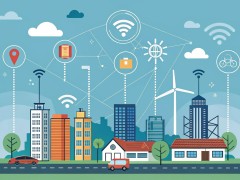
The application of artificial intelligence in the construction field is forming a multi-level structure, from intelligent sensing in the perception layer, to algorithm optimization in the decision-making layer, to system integration in the service layer, which constructs the technical foundation of "Zero Carbon Digital Building". Its core value lies in the comprehensive coordinated control of AI on building energy consumption, carbon emissions and operation efficiency.
In terms of energy consumption management, AI algorithms achieve dynamic identification and predictive optimization of building energy consumption patterns through deep learning, enabling the system to automatically adjust air conditioning, lighting, and energy supply strategies based on multi-dimensional data-driven. Compared with traditional energy-saving control systems, AI-driven energy efficiency management can achieve 10%—30% energy savings. The introduction of Digital Twin technology makes the energy consumption and carbon emission of buildings visualized, predictable, and traceable, thus providing data-driven decision support for operators.
In the design and construction phase, generative AI technology (GAI Design) is reshaping the architectural creative logic. Through the comprehensive analysis of parameters such as climate, materials, structure, and energy by algorithmic models, designers can achieve carbon emission assessment and structural optimization in the initial stage of design, realizing the low-carbon architectural concept from the source. The introduction of AI not only improves design efficiency but also promotes the transition of architecture from "energy-saving design" to "carbon-responsive design".
During the operation and maintenance phase, the integration of AI and BIM (Building Information Modeling) forms the "Smart Operation and Maintenance System". AI, through real-time data analysis, predicts equipment life and operation risks, intervenes in the maintenance process in advance, reduces energy waste and unexpected downtime, and achieves full-process control of carbon emissions. The building is no longer a passive energy consumer, but becomes an intelligent subject with "cognitive" and "regulatory" capabilities.
Three, Industrial Evolution: Systemic Transformation from Smart Buildings to Zero Carbon Digital Ecology
The intelligent building industry is experiencing a transformation from "functional integration" to "ecological synergy". Traditional intelligent building focuses mainly on automatic control, security monitoring and communication networks, while the introduction of AI has broken the system islands, achieving a leap from local intelligence to system co-intelligence.
AI technology prompts the reconstruction of production methods, organizational models, and industrial ecology in the construction industry. On the one hand, AI transforms architecture from a static project into a dynamic service system, making architecture a continuous generator and operator of data assets; on the other hand, AI promotes the deep integration of the construction industry with industries such as energy, the Internet of Things, and communication, forming a "carbon intelligence ecosystem" linked by data.
At the market level, as green and smart building standards improve, the intelligentization of buildings is becoming a new growth point for investment. According to industry forecasts, by 2030, China's smart building market size will exceed 2 trillion yuan, with AI-driven carbon management and intelligent operation and maintenance accounting for a growing share. AI is no longer just an added technology for buildings, but the "nerve center" of the building system. The future competitive focus will not be on a single product, but on who can build a three-in-one intelligent ecosystem of "AI-energy-building".
IV. Challenges and Breakthrough Paths of Low Carbon Transformation
Although the prospects of AI empowering construction are broad, there are still multiple bottlenecks in reality. First, the computing power base and data integration capability of the construction industry are relatively weak, which restricts the training of AI models and the popularization of their applications. Second, the industry standard system is not yet perfect, and there is insufficient system compatibility among different manufacturers, resulting in the fragmentation of intelligent solutions. Third, the low-carbon transformation of the construction industry still faces the balance problem between economic constraints and technology implementation.
To address these challenges, a multi-dimensional approach is needed to coordinate efforts. On the policy front, it is necessary to improve data management and carbon accounting standards for AI applications in the construction sector, and to build a unified "AI Carbon Management Platform" normative system. On the technical front, AI algorithm models should be accelerated for open sharing, and the "Model as a Service" (MaaS) should be promoted in the construction industry. On the industrial front, it is necessary to establish a cross-border cooperation mechanism to promote the co-construction of an open ecosystem by construction, ICT, and energy companies.
In addition, the deep integration of AI and carbon management also needs to focus on ethical and safety issues. How to ensure the privacy protection and system security of building data in open sharing is the key premise to achieve the sustainable development of "carbon smart buildings".
5. Future Prospects: The Co-construction Vision from "Carbon Fiber" to "Co-construction"
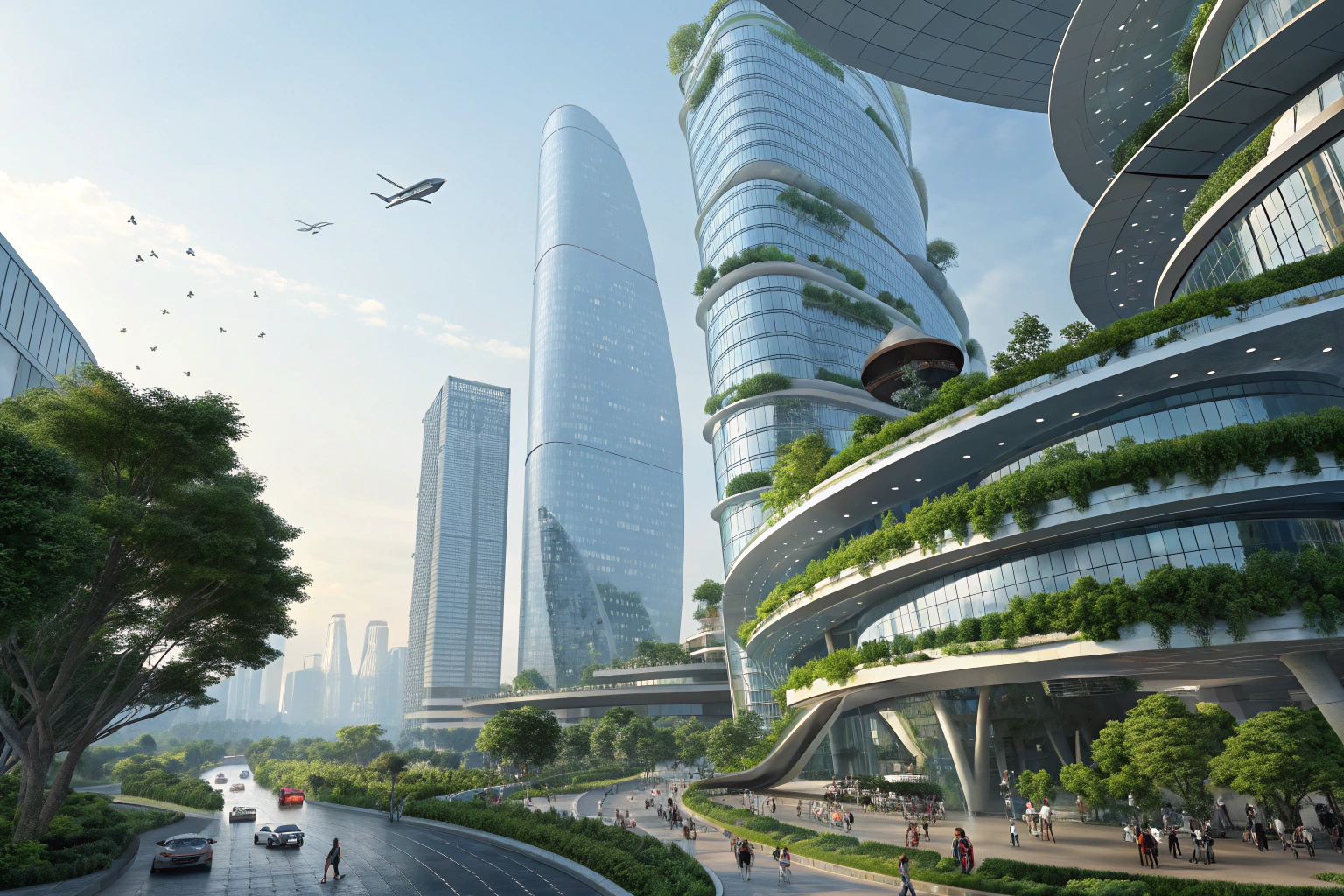
The future of smart buildings will not be merely a technological upgrade, but a revolution in concept and ecological co-construction. The mission of AI is not only to optimize energy consumption, but to achieve a harmonious coexistence between buildings and the environment, and between people and cities. Buildings will become "intelligent bodies" with environmental awareness and human-machine interaction capabilities, achieving a dynamic balance of space and energy through AI algorithms.
"Carbon neutrality and AI future" embodies this symbiotic logic: the decarbonization of buildings and the intelligence of AI are not two parallel paths, but two-way driving of the same system. AI makes carbon governance more scientific and timely, while carbon management provides clear goals and social value for AI applications. The combination of the two is driving buildings from "energy space" to "smart life space".
The future of the smart construction industry will present three major trends:First, the popularization of data-driven architecture will see the comprehensive reliance on algorithms and real-time data for the operation and management of buildings, achieving a transition from empirical decision-making to intelligent decision-making;Second, the formation of low-carbon smart architecture will see artificial intelligence deeply involved in building energy consumption monitoring and carbon emission optimization, promoting buildings to achieve energy conservation and green operation throughout the process;Third, the construction of a city-level intelligent collaboration system will see the energy linkage and carbon emission collaborative scheduling between building groups realized through AI networks, enhancing the efficiency and sustainability of the overall urban operation.
AI enables buildings to have the "ability to learn and think", while low-carbon management endows buildings with the "mission of sustainable development".