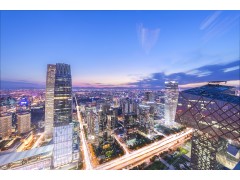
Today, we look forward to the new pattern of intelligent construction empowered by AI, based on the topics and industry insights from the CIBIS 2025 Summit.
1. Policy-driven: From infrastructure construction to smart construction and green development.
In the Outline of the "14th Five-Year Plan", the state clearly put forward the need to "promote the coordinated development of intelligent construction and architectural industrialization", accelerate the digital transformation of the construction industry, and promotethe integration and application of new technologies such as artificial intelligence, the Internet of Things, big data, BIM, cloud computing, and blockchain in the entire life cycle of construction.At the same time, the "Guiding Opinions on Promoting the Coordinated Development of Intelligent Construction and Architectural Industrialization" put forward the goal of basically forming an industrial system of intelligent construction and architectural industrialization by 2025,realizing the digitalization, intellectualization, and greening of the entire life cycle of construction.
Policy-level initiatives have driven the transition of building intelligence from previous partial automation systems to system engineering centered on information-driven and intelligent decision-making. Buildings are no longer isolated entities but have become important nodes in the urban infrastructure network. Future smart buildings need to achieve data interconnectivity, intelligent decision-making, and adaptive optimization, becoming smart terminals with "Sensing—Computing—Responding—Optimizing" closed-loop capabilities in the urban operation system.
Policy signals are also reflected in the continuous advancement of the "double carbon" strategic goals. Green and low-carbon buildings and zero-carbon industrial parks have been included in the key construction focus of the "14th Five-Year Plan" in various places, and the sub-sectors of building energy conservation, intelligent operation and maintenance, energy consumption management, etc., are welcoming policy dividends. Building intelligence driven by "carbon peaking, carbon neutrality" will become an important grasp and technical path to achieve energy conservation and carbon reduction.
By 2025, the "14th Five-Year Plan" will be completed and the "15th Five-Year Plan" is about to begin.
With the adoption of the "15th Five-Year Plan" proposal at the fourth plenary session of the 20th CPC Central Committee, China's economic development has entered a new phased cycle. The document clearly states that the primary goal should be to achieve high-quality development, to be led by new quality productivity, to promote the deep integration of intelligence, greening, and digitalization, and to accelerate the construction of a modern industrial system.
Against this macro backdrop, the building intelligence industry is experiencing a profound transformation, shifting from "system integration" to "intelligent empowerment".
II. Technological Trends: AI Empowerment, Computing Power Decentralization, and Network Infrastructure Reconstruction
Technological innovation is the core driving force of building intelligence. From the perception layer to the control layer and then to the intelligent decision-making layer, AI is becoming the "central nervous system" of building intelligence.
-
AI Empowerment: From Rule-Driven to Intelligent Decision-Making
Traditional building control systems, centered around preset logic, struggle to cope with the complex changes in environment and human factors. The introduction of AI algorithms endows buildings with the ability to predict and self-regulate. AI is gradually being embedded into Building Management Systems (BMS) and Energy Management Systems (BEMS). Through real-time analysis of multi-dimensional data, such as temperature and humidity, light, equipment load, and human behavior, dynamic energy consumption optimization and intelligent control are achieved. This "self-learning" mechanism based on data closed-loop transforms building operation from experience-driven to algorithm-driven. -
Edge computing power sinking and cloud-edge collaborative integration
With the acceleration of the construction of smart computing centers and edge computing nodes, the building itself is becoming an important part of the urban computing power network. The edge side can achieve device control, data preprocessing and rapid response, while the cloud is responsible for data aggregation, model training and strategy optimization. Through cloud-edge collaboration, the building has achieved more efficient data circulation and intelligent response, laying the foundation for the future "smart computing building". -
Network base Reconstruction and Comprehensive Cabling Upgrade
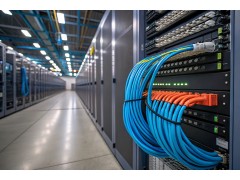
The in-depth application of AI and computing power has made the network a key infrastructure for smart buildings. High-speed, low-latency, and all-optical interconnection network architecture will become the communication hub of the new generation of smart buildings. Emerging technologies such as 400G/800G optical interconnection, SPE (Single Pair Ethernet), and digital twin wiring platforms are gradually being implemented, providing higher bandwidth and lower power consumption for smart computing centers, smart parks, and future factories. Comprehensive cabling has also been upgraded from "connection tools" to "data neural networks", becoming the underlying support system for realizing the smart computing capabilities of buildings. -