Building a bottomis a commonly used term in the stock market, whichrefers to a situation where the price of a stock or other financial product enters a relatively stable range after a long-term decline.
In such a context,the role of the smart building industry is being redefined——it is no longer just an "accessory function" of the building, but has become a key force driving stock transformation, energy conservation and carbon reduction, and digital operation.
1. New propositions under macro-cyclical transformation: from "building new" to "intelligent transformation"
The "bottoming period" of the real estate market means that there is limited incremental space, but it also nurtures new growth logic.
As supply and demand both contract, national policies are guiding the industry from "new construction-driven" to "stock efficiency improvement". According to data from the Ministry of Housing and Urban-Rural Development, the national stock building area has exceeded 70 billion square meters, of which the coverage rate of intelligent systems is less than 30%.
This means a trillion-level market opportunity is being formed:Building intelligence has become the "first driving force" for the quality and efficiency of existing assets.
Urban renewal, renovation of old residential areas, and energy-saving renovation of public buildings and other projects will become the main battlefield for the intelligentization of buildings. The new generation of technology systems represented by"Smart Energy Management", "Smart Lighting Control", and "Digital Operation and Maintenance Platform" are becoming the focus of policy encouragement.
Since the end of the "14th Five-Year Plan", the National Development and Reform Commission and the Ministry of Housing and Urban-Rural Development have repeatedly emphasized the need to "promote the large-scale application of green and low-carbon technologies in the construction industry" and have successively launched pilot green and low-carbon districts in various places. This provides a new policy fulcrum for the intelligent construction industry.
II. From "Energy Saving" to "Carbon Intelligence": Structural Opportunities Driven by Low Carbon Policies
“Dual Carbon Strategy” is forcing the construction industry to move from “Energy Consumption Management” to “Carbon Emission Accounting”. Building energy consumption accounts for about 40% of the total carbon emissions in China. How to realize the visualization of energy data and dynamic regulation of energy efficiency through intelligent means has become the core issue of the industry.
At the policy level, it is clearly proposed topromote the construction of real-time monitoring and dynamic analysis system for building energy consumption data. This means that every link from building design, construction to operation will enter a new stage of "smart and controllable". Therefore, the growth point of the intelligent building industry in the next few years will shift from traditional security, weak electricity system,to energy management, smart operation and maintenance and carbon emission visualization platform.
Meanwhile, the deep integration of AI and the Internet of Things is accelerating this process.Smart sensing, data midsoles, AI energy consumption optimization algorithmsand other technologies are enabling buildings to move from "passive energy saving" to "active decision-making". This will also reshape the industry ecology, transforming system integrators from "engineering contractors" to "data service providers".
Three, Challenges: The Double Test of a Fragmented Market and Capital Constraints
However, opportunities coexist with challenges. The intelligent construction industry will face three realistic issues in the next five years:
1、Intensified project competition under investment contraction.Against the backdrop of a decline in real estate development investment, industry projects are more focused on urban renewal and public buildings, posing higher demands on the comprehensive integration capability and cross-system integration capability of enterprises.
2、Insufficient standardization and cost pressure.The current intelligent building system still shows a fragmented state, with different brands, protocols, and interfaces lacking unified standards, resulting in low efficiency and high cost of renovation projects.
3、Challenges of transforming from engineering-oriented to service-oriented.As the market focus shifts to the operation phase of existing buildings, building intelligent enterprises must evolve from "delivery-oriented business" to "operation+data service" model. This not only requires technological accumulation, but also tests business model innovation and capital endurance.
IV. Trend Forecast: Smart buildings are set to evolve towards "systematization, low-carbonization, and platformization".
Over the past two decades, the rapid growth of the real estate industry has been the "underlying driving force" for the smart building industry. However, as the new construction market gradually stabilizes and the supply and demand relationship returns to balance, the smart building industry is also at a structural turning point—the slowdown in incremental growth, the rise of the existing stock, green transformation, and smart computing empowerment have become the main themes of the industry in the next five to ten years.
Synthesizing policies, market, and technological trends, we believe that the construction intelligentization industry will present the following three major directions during the "15th Five-Year Plan" period:
1、Systematization integration becomes mainstream. From single system intelligence to full-scene interconnection, smart lighting, building automation, energy consumption monitoring, security systems, etc., will be uniformly connected through the data cloud platform, achieving cross-system linkage and optimization.
2、Low-carbon design becomes a must. Smart energy management system will become a standard configuration for building energy conservation and renovation, and the collection, analysis and AI optimization of building energy consumption data will become a "new standard".
3、Platform-based operation becomes the future. SaaS-based operation and maintenance, building digital twin, AI visualization operation platform and other new models will promote the industry from project-based to long-term operation and value creation.
5、CIBIS 2025 Focusing on the new trend of the industry
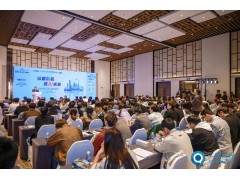
At a critical period of macro transformation and industrial restructuring,The 26th CIBIS International Building Intelligence Summit (CIBIS) Shanghai Station will be held grandly onNovember 20th. The conference will focus on the core directions of building intelligence in the new cycle, includingexisting stock intelligent transformation, green energy conservation, energy management, and AI empowerment.
The conference will invite experts and business leaders from the fields of building intelligence, energy management, optical communication, data centers, AIoT, etc., to jointly discuss:
-
In the new cycle, how can building intelligence find growth space in the existing market?
-
How will the standardization process of green buildings affect the competitive landscape of the industry?
-
In the era of intelligent computing, how does the underlying architecture of the building energy management platform evolve?
-
Against the backdrop of a stable and bottoming macroeconomy, how should industry enterprises adjust their strategies?
This is not only a industry summit, but also a ideological exchange and trend prediction for the future.