If the chip is the brain of the smart computing center, then the integrated wiring and network architecture are the "vascular system" that allows data to flow efficiently within it. How to reconstruct this "data circulation system" in the AI era is becoming a key factor in determining the competitiveness of future buildings and data centers.
1. From Computing Power to Universal Power: The "Hidden Revolution" of Infrastructure
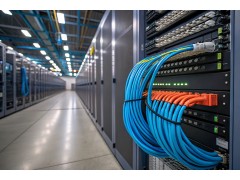
In AI-driven smart data centers, the leap in computing power means parallel computing and high-speed exchange of massive data, which poses unprecedented requirements on the underlying network. Traditional 10G or 40G architectures can no longer meet the high-density connection needs of AI training clusters. With the rapid maturity of 400G, 800G, and even 1.6T optical interconnection technologies, "full opticalization" is becoming the new standard for smart data centers.
The new generation of integrated wiring system is moving from "connection" to "intelligent", showing three technical characteristics:
-
Fiber optic priority, copper cable as a supplement: Fiber optic completely replaces copper cable in the main and core layers, and the end access achieves a dynamic balance between high speed and energy saving;
-
Modularity and scalability: Flexible deployment and rapid upgrade of computing power clusters supported;
-
Intelligence and Visualization: Through AI monitoring and electronic tags, the full-link closed loop from asset identification to automatic operation and maintenance is realized.
This "invisible revolution" is moving wiring from the shadows to the forefront, becoming a key variable in data center competitiveness.
2. Smart Computing Center: Strategic Track in the New Cycle
Driven by dual policies and industries, China's smart computing center construction has entered the "fast lane". Relevant industry research data show that by 2028, China's smart computing center market size is expected to exceed 1 trillion yuan, in which the investment in network infrastructure and wiring systems will continue to rise, accounting for more than 15%.
The future intelligent computing center is not just a stacking of computing power clusters, but asmart ecosystem with self-awareness, self-decision making, and self-optimization capabilities. This means that every layer of the infrastructure, from communication interfaces to energy scheduling, from wiring structures to AI algorithms, is being "intelligentized".
Against this backdrop, integrated cabling companies are accelerating innovation:
-
MPO/MTP High-Density Fiber Optic ConnectivitySatisfying high-speed interconnection for AI clusters;
-
Low insertion loss components and intelligent patch panelsEnhance network reliability;
-
Digital Twin + AI DiagnosisShifting from "reactive response" to "predictive maintenance" in operation and maintenance.
This is not only a technological revolution, but also a new opportunity for the reconstruction of the industrial chain.
Three, From Data Center to Smart Building: The Urban Extension of Computing Power
The penetration of AI has made "computing power" no longer limited to data centers. Scenarios such as smart parks, hospitals, and commercial complexes are gradually introducing small AI computing nodes and edge computing architectures. They achieve the coordination of multiple systems such as building automation, security, lighting, and energy management through a unified wiring system and AI computing platform, creating "computable architectural spaces".
Future buildings will become "distributed smart computing nodes":
-
Data flows and calculates in real-time within the building;
-
Edge computing reduces reliance on the cloud;
-
Green low-carbon technology and intelligent operation and maintenance to achieve optimal energy consumption.
This is the ultimate value of integrated wiring in the AI era——not only connecting devices, but also connecting computing power, energy efficiency, and cognitive capabilities.