From "Digital New Infrastructure" to "Smart Building" accelerating implementation
Over the past decade, China's smart construction industry has been driven mainly by informatization and automation. However, entering the "14th Five-Year Plan" period, the state-level "Smart Buildings and Green Buildings" has been included as an important part of the new infrastructure. The Ministry of Housing and Urban-Rural Development issued the "Guiding Opinions on Promoting the Synergistic Development of Smart Construction and Building Industrialization", proposing to achieve the digital management of the entire life cycle of buildings by 2025, and to promote the deep application of AIoT, cloud computing, digital twin and other technologies in design, construction and operation and maintenance.
This policy orientation is accelerating the construction from "sensory" to "cognitive". Future buildings are no longer just a collection of energy and function, but a "digital life form" withdata interaction, intelligent decision-making, and self-evolution capabilities.
AI becomes the central force of building intelligence.
In the context of the full-scale penetration of AI, the logic of building systems is being reconstructed. In the past, architectural intelligence relied more on static logic, while today's smart buildings rely on AI algorithms, edge computing, and large model capabilities to achieve "dynamic decision-making" and "self-learning optimization".
1. A new model of intelligent control of buildings driven by computing power:The computing and reasoning capabilities of AI models are being embedded in building management systems (BMS) and building energy management systems (BEMS). Through real-time analysis of device data, environmental parameters, and user behavior, AI can automatically adjust energy consumption strategies, lighting modes, and air conditioning loads to achieve dual optimization of energy saving and comfort.
2. Cloud Computing and Data Centralization:The building is becoming an extension of the urban computing power network. Through the combination of cloud services and the Internet of Things gateways, the data of various subsystems of the building is realized to be uploaded, aggregated, and intelligently analyzed to support multi-dimensional applications such as energy consumption management, carbon emission monitoring, and fault prediction.
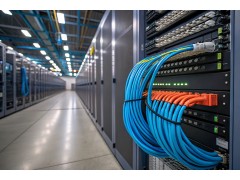
3. Intelligent reconstruction of the network foundation:A high-speed, low-latency, all-optical interconnection network architecture has become the infrastructure for building intelligence in the AI era. The next generation of integrated wiring systems is transforming from "connection tools" to "data neural networks". New technologies such as 400G/800G optical interconnection, SPE (Single Pair Ethernet), and digital twin wiring platforms are providing higher density and lower power consumption communication support for smart computing centers, smart parks, and future factories.
AI+Green Dual-Drive, Opening a New Trillion-Level Space
The intelligent building industry isexperiencing a dual dividend period of AI and low-carbonization. According to relevant research institutions, by 2030, China's smart building market size is expected to exceed 2.5 trillion yuan, with a compound growth rate of over 20%. The core of the growth comes from three directions:
-
Smart Computing Center and Data Infrastructure: AI applications drive the construction of computing power infrastructure, and intelligent wiring, refrigeration, and operation and maintenance systems become new growth points;
-
Zero Carbon Park and Public Building Energy Efficiency Renovation: Policy-driven energy transition drives the demand for smart lighting, smart energy use, and energy efficiency analysis platforms;
-
Industry scene intelligent upgrade: including smart hospitals, smart manufacturing and smart campuses, is becoming the main battlefield for the implementation of intelligent control systems and AI decision-making engines.
The competition among enterprises is also shifting from product comparison to system ecology. Those enterprises that have the integration of AI algorithms, building control, data platform, and visualization capabilities will grasp more dominance in the new cycle.
From "Smart Building" to "Smart Computing Building"
The second half of intelligent construction will be a competition between "intelligent computing center" and "full-domain perception". Future intelligent buildings will not only have computing power access and AI reasoning capability, but also achieve real-time computing and self-optimization in the spatial dimension.
"Smart Building" will present three major evolution directions:
-
Full-light Interconnection: based on the F5G optical network, achieve low-latency, low-power communication;
-
AI Middle Platform: Unify algorithms and data models to provide intelligent decision-making services for various subsystems;
-
Digital Twinning: Real-time mapping and predictive maintenance of building conditions.
This means that future intelligent buildings are no longer limited to energy conservation and control, but becomepart of the urban computing power network, symbiosis with the AI industry.
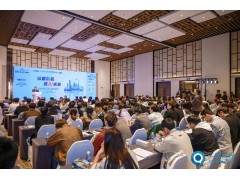
At this critical juncture of industry transformation,The 26th China International Building Intelligence Summit (CIBIS 2025 Shanghai Station)is scheduled to be heldon November 20thatThe Shanghai CunDa Marriot Hotelwith great honor.
This summit will focus on core issues such as AI, optical communication, digital architecture, low-carbon parks, etc., withCommscope, Delotie, Haier Smart Building, Tongfang, Yinlan, Hisense, GVS, Carrierand other industry-leading enterprises, jointly exploring technological innovation and market opportunities in building intelligence.
At the time, several experts will share:
-
Application path of AI in the construction of dual carbon and intelligent integration;
-
Technological innovation in the wiring architecture of the intelligent computing center;
-
Digital Intelligent Building (DIB) System Construction and Practice;
-
Scenarios of single-pair Ethernet and full-light interconnection.
This is atwo-way communication event at the forefront of industry technology and market insights, and also an important platform for the synergy of innovation between upstream and downstream industries in the industrial chain.