

With the guidance of national policies and the continuous progress of technology, the construction intelligentization industry is experiencing a profound digital transformation. In particular, the "Opinions on Deepening the Implementation of the 'AI+' Action" issued by the State Council clearly points out that it is necessary to promote the deep integration of artificial intelligence (AI) with various industries, reshape the human production and living paradigm, and the construction intelligentization industry is facing a dual opportunity of technology and policy. How to seize these opportunities and promote the healthy and rapid development of the industry has become the focus of attention both inside and outside the industry.
1. Digital Transformation: Intelligent upgrading from construction to cities
In the past few decades, the focus of intelligent construction has been mainly on building automation, security systems, and energy efficiency management. However, with the rapid development of new technologies such as artificial intelligence, the Internet of Things, and 5G, intelligent construction is gradually transforming towards a deeper level of "digitalization". This transformation is not just a superposition of technology, but also a change in the industrial model. Intelligent construction no longer simply relies on the integration and upgrading of hardware equipment, but pays more attention to the in-depth mining of data, intelligent decision-making, and the efficient allocation of resources.
According to relevant planning suggestions, the state has clearly proposed to "promote energy conservation and carbon reduction work in the construction field", and emphasized in the "AI +" action plan that the deep integration of artificial intelligence technology and the construction industry should be promoted to improve the energy efficiency and service quality of buildings. Therefore, the intelligentization of buildings is no longer a simple device interconnection, but a smart decision-making system and a data analysis platform, which can sense, predict and optimize the building in real time through AI algorithms.
2. AI technology empowering building energy conservation and carbon reduction
Driven by the “double carbon” goal, the building energy consumption accounts for a large proportion of the total energy consumption in China, and the carbon emissions generated during the operation of buildings are even more important for energy conservation and carbon reduction. The traditional energy conservation in buildings relies on the optimization of the enclosure structure and the improvement of traditional energy-saving equipment, but the limitations of this model have gradually become apparent. In order to truly achieve a low-carbon transformation in the field of buildings, the deep integration of AI and building intelligence provides new solutions for energy conservation and carbon reduction.
AI manages the internal environment of a building in a fine-grained manner by dynamically regulating data such as temperature, humidity, light, foot traffic, and energy consumption through real-time monitoring and integration with intelligent control systems. For example, AI can automatically adjust the operation state of air conditioning and lighting equipment based on factors such as outdoor temperature, indoor usage conditions, and energy-saving strategies, further improving energy efficiency and reducing unnecessary energy consumption.
In addition, AI algorithms are also able to predict future energy consumption trends of buildings based on big data analysis, and optimize energy distribution. Through the model of "data-driven decision-making + technology integration and innovation", the energy-saving management of buildings changes from passive response to active control, achieving dual optimization of "refined + intelligent".
Three, Intelligent construction and digital infrastructure construction
In the "Suggestion for the 15th Five-Year Plan", the construction of digital infrastructure has been elevated to a new height. Specifically, in the construction industry, this policy direction means that the intelligentization of buildings will no longer be the renovation of a single building, but the intelligent upgrading of the entire urban infrastructure.
With the advancement of the "New Infrastructure" policy, building intelligence is moving towards larger-scale urban applications. AI-driven digital management, smart city infrastructure, and multi-modal energy management systems are becoming the focus of future building intelligence development. Through the deep integration of data centers, the Internet of Things platform, and cloud computing capabilities, building intelligence is no longer limited to the equipment control within a single building, but can achieve large-scale intelligent management at the urban level. This injects a powerful digital engine into the future development of cities.
For example, smart parks, smart transportation, smart grids, green buildings and other scenarios are becoming an important part of digital infrastructure construction, and behind these scenarios are intelligent systems with AI as the core. Through computing power, cloud computing and real-time interaction of data, more efficient and accurate services are provided for urban management.
IV. Industry Opportunities and Challenges: How to Seize the "AI+" Window
The "Opinions on the Action of 'AI+'", it is clearly pointed out that by 2027, China will take the lead in achieving extensive deep integration of artificial intelligence with multiple key fields. This strategy is not only a vision for the application of AI technology, but also provides unprecedented market opportunities for the intelligent construction industry. How to deeply integrate AI technology with the construction industry is a key issue facing the industry.
Firstly, AI technology will drive the construction industry to expand into fields such as intelligent operation and maintenance, intelligent design, and intelligent construction. In the design phase of smart buildings, AI can assist in optimizing architectural structures, improving design accuracy, and automatically generating personalized plans based on user needs. During the construction phase, AI can enhance construction efficiency and reduce labor costs by using intelligent devices such as robots and drones. once it enters the operation phase, AI can monitor the operation status of buildings in real-time through intelligent management systems, and dynamically optimize to ensure the operational efficiency of buildings.
However, it is not easy to implement these technologies. The industry still faces certain challenges. On the one hand, there is a gap between the maturity of technology and the market, and there is a lag between the speed of innovation in the field of intelligent construction and the market demand. On the other hand, the standard system in the industry is not yet perfect, and the integration and collaborative dependence of cross-domain technologies depend on clearer policy guidance and industry norms.
5. Industry Development Trends: Towards a Digital Future
With the push of policies and technological innovation, the construction industry will experience several major trends in the future:
From equipment integration to data-driven: Intelligent construction will shift from traditional equipment integration models to data-driven models. The introduction of AI technology will break the "information silos" between various construction systems, achieving data sharing and collaborative optimization.
Proliferation of smart operation and maintenance: Through the combination of AI and IoT technology, building management will be more intelligent, and energy efficiency management, facility operation and maintenance, environmental monitoring, etc., will be automated through intelligent platforms, reducing human intervention and operational costs.
Comprehensive promotion of green buildings: With the advancement of the "double carbon" policy, intelligent technology will become an important support for green buildings. The application of AI technology in energy conservation and emission reduction will continue to deepen, promoting the construction industry to achieve a higher level of green transformation.
Construction of a city-level intelligent ecosystem: Intelligent building will no longer be limited to a single building, but will expand to the intelligentization of the entire city. The future smart city will rely on a powerful data infrastructure, computing power resources, and AI decision support systems.
6. Summit Preview: Focusing on the Future of AI and Building Intelligence
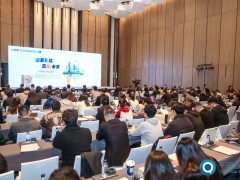
To promote industry communication and technological development, Qianjia Zhike will hold two intelligent building summits this month, bringing together industry experts and corporate leaders to discuss how AI technology can drive the intelligentization and green transformation of buildings.
CIBIS 2025 Beijing Station
Time: November 18, 2025, 13:00-17:30
Location: Beijing·Jinyu Sheraton Hotel
The summit will focus on issues such as AI technology, zero-carbon buildings, and smart parks, with a particular emphasis on how to promote the green transformation of the construction industry through intelligence and digitalization.